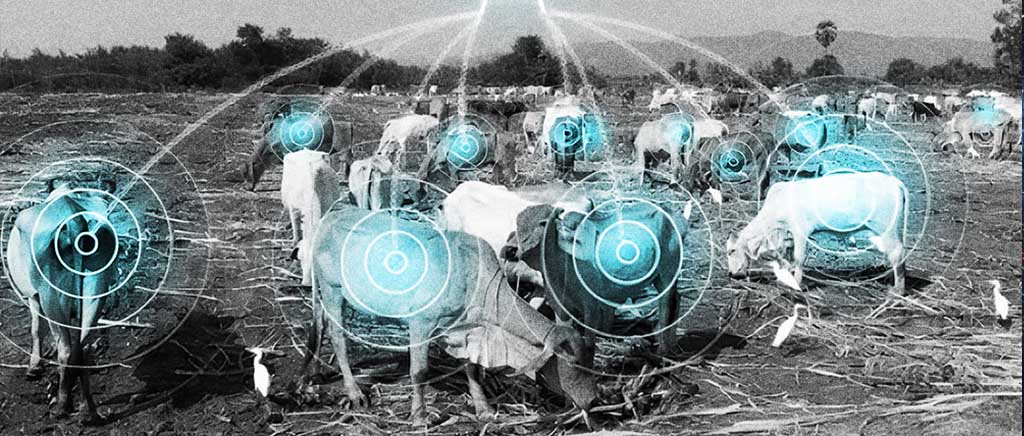
Wireless IoT gadgets have gradually turned into the foundation of modern sectors, including smart agriculture, asset monitoring environmental control in data centers, or coordinating logistics over vast areas. These small sensors frequently find themselves in locations that technicians rarely (or never) access: within walls, deep inside storage tanks, atop remote mountains, or out in the open ocean. For this reason, their task is straightforward yet vital: transmit data without requiring manual upkeep.
However, all IoT projects encounter a major challenge: battery longevity and ways to extending IoT battery life?
Why Battery Longevity Is More Crucial Than Any Other Aspect in IoT
The majority of remote IoT devices lack a constant power grid, making them completely dependent on batteries. Consider the scenario of thousands of sensors scattered over vast areas—replacing their batteries is not only costly but, in many instances practically unfeasible. For instance, certain sensors installed within infrastructures or offshore settings may remain unreachable for several years. If the battery depletes the entire device becomes unusable.
This is why enhancing battery longevity is not merely a simple “feature”; it often determines whether an IoT implementation succeeds or fails. Today, gadgets such as the Sepehr Data Logger, employed for tracking environmental parameters in industrial and IT environments, are designed with automatic battery charging during power failures; because in these environments, dependability isn’t optional; it’s crucial. Because high-power networks such as 4G/5G are not ideal for remote IoT applications, the majority of low-power gadgets depend on LPWAN solutions like LoRaWAN and satellite IoT, for worldwide reach. In both cases, the principle is straightforward:
The larger the amount of data transmitted, the quicker your battery depletes. Presented here are five approaches that engineers employ to prolong IoT battery longevity occasionally by several years.

Transmit Only What Is Necessary (Data Minimization)
Among all components inside a wireless IoT device, the radio module is the biggest energy consumer.
To put things into perspective:
When idle or sleep mode: around 0.1 W
During transmission: up to 7 W, 7,000% increase each time the device transmits data.
Human-friendly takeaway:
Only send what is absolutely essential.
Practical recommendations:
- Only send critical events, not constant raw data to extend IoT battery life
- Use compression to shrink the data before transmission.
- Combine values (e.g., send max/min/average instead of hundreds of readings).

Minimize the Frequency of Data Transmission (Optimizing Scheduling)
It’s not the volume of data transmitted that counts— the frequency of sending it matters even more.
Each transmission forces the radio to activate, authenticate, establish a connection, transmit and subsequently await confirmation. This whole sequence consumes a significant amount of energy.

Real example from a GPS tracker:
- Sending every 5 minutes → 1 week battery life
- Sending every hour → 3 weeks
- Sending once per day → up to 6 months
The difference is striking.
Match your reporting interval to your actual needs.
- Is it truly necessary for a water-level sensor to send updates every few minutes? in most cases, it isn’t.
Add a “Heartbeat” message:
- A brief regular signal to verify the device’s activity, with data transmitted less frequently or solely as needed.
Process Data Locally (Edge Computing)
To significantly increase battery longevity, handling data processing directly on the device is among the intelligent approaches you can take.
Rather than transmitting hundreds or thousands of unprocessed readings each hour, the device can process the data locally and send only the necessary information.
Ways in which edge computing assists:
Eliminate clutter by transmitting data only upon any modification. Provide summary data rather than sending continuous raw readings. Implement error detection to prevent invalid readings; This enhances the systems efficiency while also lowering the network load.
Avoid TCP/IP – Use Message-Based Protocols Instead
Engineers with a background in networking frequently opt for TCP/IP due to its familiarity. However, in low-power IoT environments—particularly those involving satellite communication—it proves to be highly inefficient.
The problem with TCP/IP:
- Needs constant handshakes
- Requires connection maintenance (Keep-Alive)
- Numerous control packets are transmitted for extremely short data messages
- The majority of energy is not consumed by transmitting your data—it is lost in keeping the connection active.
Use message-based protocols instead
These protocols transmit compressed, unidirectional messages similar to SMS. The device transmits the message. Instantly returns to sleep mode.
Examples:
Iridium SBD
Iridium Messaging Transport (IMT)
Inmarsat IsatData Pro
NIDD (Non-IP Data Delivery) in cellular IoT
These technologies significantly cut down on overhead. Prolong battery duration.
Use Solar Power or Environmental Energy (Energy Harvesting)
Solar panels and various energy-harvesting technologies (thermal, vibration, etc.) are not designed to energize IoT devices—but they work well for slowly charging the battery. This gradual consistent replenishment can extend a device’s life by two to three times.
In real-world deployments:
- During the day, solar energy powers the device’s basic operations.
- During nighttime the energy stored in batteries powers transmissions
- Certain satellite IoT modules can operate for over 10 years, using energy harvested from the sun
- If designed properly, the backup battery might only have to engage after years of functioning.

Conclusion: The Secret to Extend IoT Battery Life Is a Smart
Design
There isn’t a single solution, durable IoT devices rely on a mix of efficient hardware and smart software functions.
The most effective approach involves:
- Edge computing: process data, on-site
- Streamlined dispatch timetables: transmit data, less frequently
- Protocols based on messaging: remove TCP/IP overhead
- Hybrid energy systems: battery + solar or other harvesting methods
- In applications where manual maintenance is unrealistic, these techniques become essential, not optional. Long-lasting power management is the backbone of any reliable large-scale IoT project.