
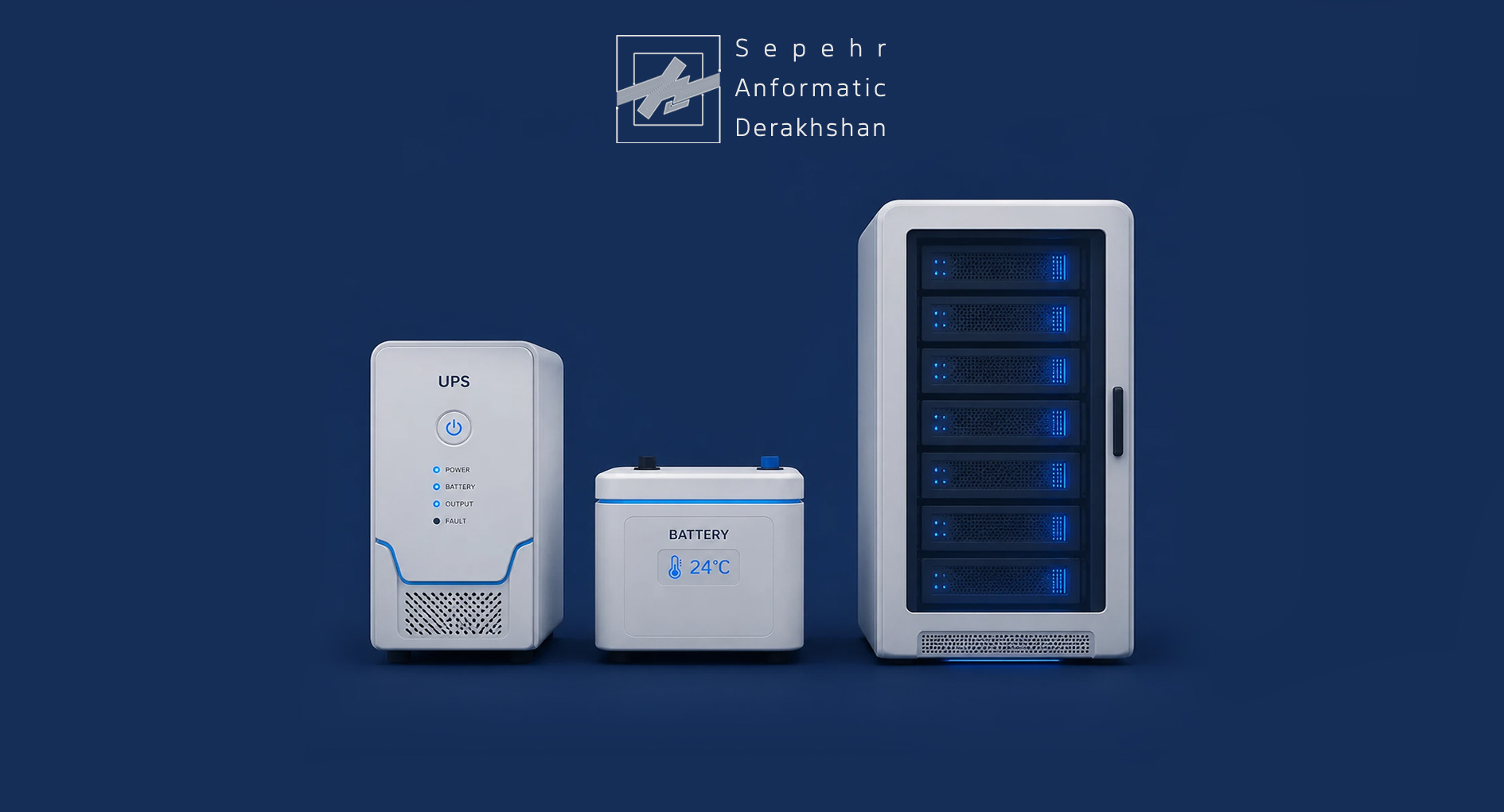
In the realm of critical IT infrastructure and server rooms, the stability and reliability of UPS (Uninterruptible Power Supply) systems are paramount. The batteries are the heart of these systems, and their service life is heavily influenced by the operational environment’s temperature. High temperatures are the primary enemy of the VRLA/SLA and Lithium-ion batteries commonly used in these spaces. Elevated temperatures accelerate destructive chemical reactions, leading to premature degradation, reduced storage capacity, and ultimately, an increased risk of failure during power outages. Therefore, precise environmental condition management is not merely an optimization strategy but a necessity for ensuring system reliability. This comprehensive article provides a guide of how to monitor UPS Battery Temperature in server rooms and power rooms, focusing on proactive maintenance, presenting solutions, and introducing the necessary equipment and software to guarantee maximum performance and lifespan for UPS batteries.
The Importance of Controlling UPS Battery Temperature:
According to Arrhenius Law, for every 10°C increase in temperature above the standard threshold (typically 25°C), the lifespan of a UPS battery is halved. High temperatures accelerate internal chemical processes, causing plate corrosion and electrolyte evaporation (in lead-acid batteries), consequently reducing capacity and leading to premature failure.
- Ideal Temperature: A range of 20°C to 25°C (68°F to 77°F) is considered optimal for most VRLA/SLA and Lithium-ion batteries. Within this range, the rate of chemical degradation is minimized.
- Impact of High Temperatures: Accelerated plate sulfation, increased internal resistance, electrolyte evaporation, reduced UPS runtime, and increased internal heat generation.
- Impact of Low Temperatures: Temporary decrease in electrochemical capacity (approximately 10-20% reduction for every 10°C drop below 25°C) and increased electrolyte viscosity. While permanent damage from cold is generally less severe than from heat, battery performance during discharge is notably impaired.
Server Room and UPS Battery Temperature Standards:
Reputable organizations like the American Society of Heating, Refrigerating and Air-Conditioning Engineers (ASHRAE) recommend broader temperature ranges for IT equipment (e.g., 18°C to 27°C or 64.4°F to 80.6°F). However, to maximize UPS battery lifespan, the ambient temperature within the room housing the batteries should be more tightly controlled, ideally stabilized within the 20°C to 22°C (68°F to 71.6°F) range.
Physical Solutions and Maintenance for Cooling:
Optimal UPS battery temperature monitoring requires a multi-layered and systematic approach:
- Room Design: Ensure physical and thermal separation of the power equipment and battery room from other areas. This separation facilitates more precise temperature and humidity control.
- Airflow Management: Implement a Hot Aisle/Cold Aisle layout, even for battery racks. Batteries should be installed where cool air flows directly and uniformly across them, allowing warm air to be efficiently exhausted. Avoid obstructing airflow by stacking equipment or placing obstacles.
- HVAC (Split System) Control: Utilize air conditioning systems specifically designed for server rooms, capable of precise temperature and humidity control. These systems must have adequate capacity to dissipate the thermal load from IT equipment, UPS units, and especially the heat generated by the batteries themselves. Maintaining a relative humidity between 40% and 55% is also crucial to prevent electrostatic discharge and corrosion. Employing professional equipment like Sepehr’s smart sensors for temperature and humidity can help organizations standardize their rooms.
- Battery Enclosure Care: Battery cabinets or enclosures should be adequately designed with sufficient intake and exhaust vents to effectively dissipate the heat produced by batteries during charge and discharge cycles, which can be substantial. Regular cleaning of these vents from dust is essential.
Remote Monitoring for UPS Battery Temperature:
Proactive, remote monitoring is key to preventative management and rapid incident response. Sepehr Environmental Monitoring Software is an ideal, integrated tool for continuous oversight of critical server room and UPS equipment parameters, offering:
- Temperature and Humidity Monitoring: By connecting smart environmental sensors, UPS battery temperature, various points in the server room, and even battery surface temperatures can be monitored. Setting alarm thresholds (e.g., a warning at 24°C and a critical alert at 26°C) triggers automatic notifications via SMS, email, or the software interface to the technical team.
- Voltage and Amperage Surveillance: Current sensors and voltage measurement modules for UPS input/output, DC bus voltage, and connected load current accurately track these parameters. This data, relayed through the software, indicates the overall health of the power system. Abnormal voltage fluctuations can signal issues with UPS charging settings directly impacting the battery. Unexpected increases in load current might indicate new equipment connections or a fault within a specific load.
- Auxiliary Equipment–Activation Status: With support for digital input/output modules, monitoring the on/off status of cooling systems like split units or air handlers is possible. This feature ensures that if a UPS battery temperature rise triggers the cooling system, the unit actually powers on. Distinct alerts are sent via SMS and messenger apps if temperatures unexpectedly exceed standard levels.
Optimizing Ventilation System Performance with Smart Scheduling:
To minimize mechanical wear and extend the service life of split AC compressors or cooling units, the intelligent weekly scheduling feature of Sepehr software can be utilized.
Conclusion:
Monitoring and managing UPS battery temperature is an ongoing, preventative operation that demands attention and planning. By following ideal UPS battery guidelines of temperature ranges (20-22°C), implementing physical air management strategies, and utilizing advanced monitoring software like Sepehr Anformatic Derakhshan for oversight of temperature, voltage, current, and intelligent control of cooling systems, one can maximize UPS battery life, prevent sudden failures, and ensure the overall reliability of the power backup system.